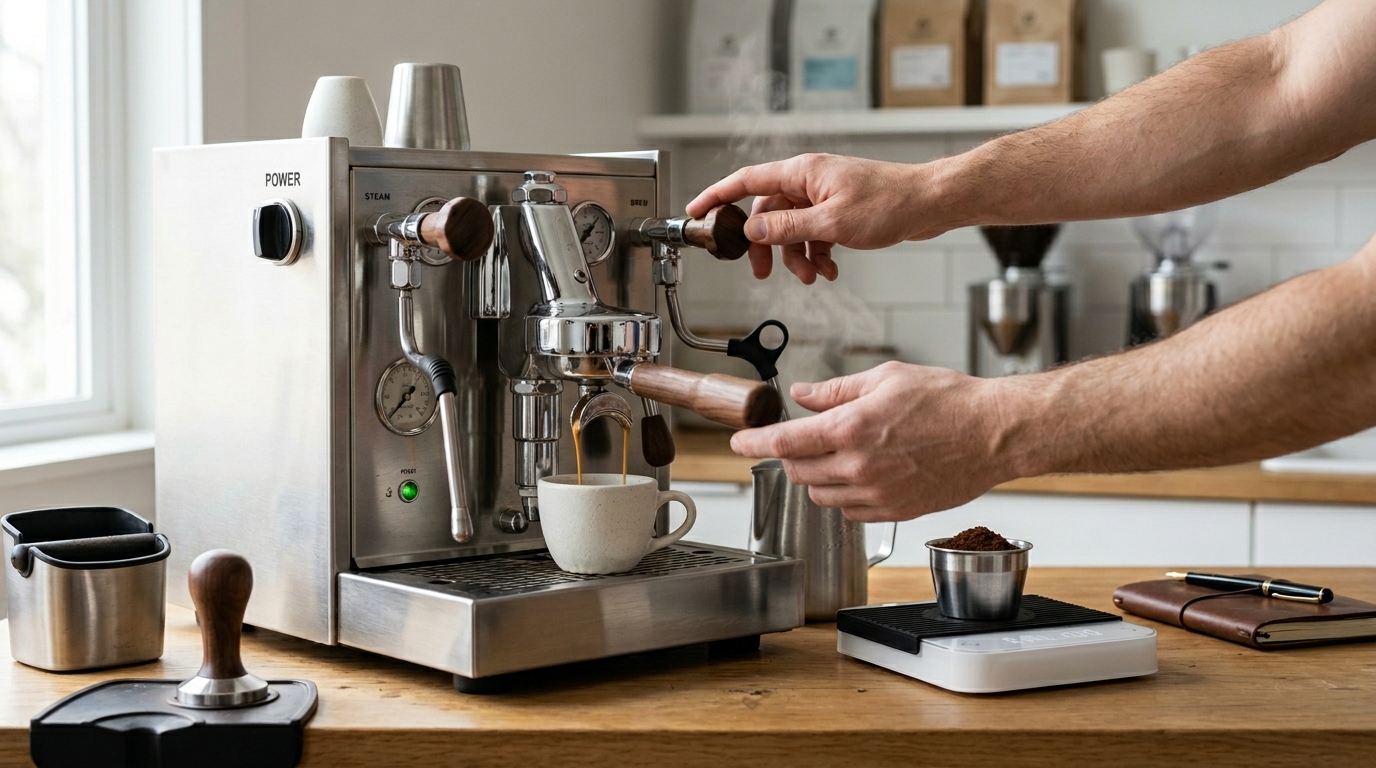
The espresso machine landscape of 2026 has witnessed a profound shift toward repairable espresso machines that prioritize longevity over fleeting aesthetics. As discerning home baristas increasingly reject disposable electronics in favor of mechanical excellence, the question becomes clear: which machines truly merit the “buy it for life” designation?
This comprehensive analysis examines current models through the lens of repairability, parts availability, and material quality. Our methodology evaluates each machine’s modular design, standard component compatibility, and manufacturer support for long-term ownership.
The Foundation of Repairable Design in Modern Espresso Machines
True durability begins with fundamental engineering principles. The finest repairable espresso machines share common characteristics: brass boilers that resist corrosion, mechanical switches that outlast electronic panels, and standard 58mm group heads that ensure universal parts compatibility.
These machines embrace the precision movement that has defined 2026’s coffee culture. From pressure profiling capabilities that allow flow control refinement to step-down baskets that optimize extraction consistency, durability-focused designs integrate advanced features without sacrificing serviceability.
The modern home barista workflow demands reliability during peak entertaining moments. Whether crafting soup shots at 1:4 ratios for guests or managing back-to-back extractions during morning routines, these machines maintain thermal stability and mechanical precision across extended use periods.
Top 5 Buy It For Life Repairable Espresso Machines
1. Rocket Appartamento R: Heritage Engineering Refined
The Appartamento R exemplifies mechanical excellence through its E61 group head design and dual-boiler configuration. This machine features brass internals throughout, ensuring decades of corrosion resistance. Standard Faema E61 components guarantee parts availability, while the simple rotary pump design facilitates straightforward maintenance.
Key durability features include externally adjustable OPV valve, replaceable heating elements, and modular solenoid assembly. The copper boiler construction provides superior thermal mass, supporting consistent pressure profiling during extended brewing sessions.
2. La Marzocco Linea Mini: Commercial DNA at Home
Drawing from decades of commercial machine development, the Linea Mini translates cafe-grade durability into home-kitchen proportions. Its saturated group design eliminates temperature fluctuation, while the stainless steel boiler resists mineral buildup across varying water conditions.
The machine’s modular construction allows individual component replacement without full disassembly. Standard commercial fittings ensure parts remain available indefinitely, supported by La Marzocco’s extensive service network.
3. Profitec Pro 700: German Engineering Precision
The Pro 700 demonstrates methodical German engineering through its dual-boiler system and PID temperature control. Every component follows standard specifications, from the 58mm portafilter to the Ulka pump assembly. This standardization ensures straightforward repairs and affordable maintenance costs.
The machine’s steel frame construction provides exceptional stability, while brass fittings throughout the water system guarantee longevity. The external reservoir design facilitates easy cleaning and descaling procedures.
4. ECM Mechanika V Slim: Modular Excellence
ECM’s Mechanika V Slim prioritizes user serviceability through its accessible internal layout and comprehensive documentation. The rotary pump design offers superior longevity compared to vibratory alternatives, while the heat exchanger system simplifies maintenance requirements.
This machine excels in parts availability, with ECM maintaining extensive component inventories and providing detailed service manuals. The external pressure gauge allows real-time system monitoring, preventing potential issues before they require repairs.
5. Lelit Bianca V3: Modern Innovation with Classic Reliability
The Bianca V3 represents evolved engineering, combining traditional durability with contemporary features like flow control profiling. Its dual-boiler design utilizes standard heating elements and sensors, ensuring replacement parts remain accessible.
The machine’s wooden accents demonstrate thoughtful material selection, while the stainless steel construction provides corrosion resistance. Advanced features like programmable pre-infusion integrate seamlessly with mechanical reliability.
Material Quality Analysis: The Foundation of Longevity
Superior materials define the difference between temporary appliances and generational investments. Brass components resist mineral corrosion better than aluminum alternatives, while stainless steel surfaces maintain hygiene standards across decades of use.
The finest machines utilize marine-grade brass for water contact surfaces, food-grade stainless steel for milk systems, and cast iron or steel for structural elements. These material choices ensure consistent performance despite varying water quality and usage intensity.
Thermal management becomes particularly crucial during home barista workflow optimization. Copper boilers provide superior heat retention and distribution, supporting consistent extraction temperatures during rapid-fire brewing sessions.
Parts Availability and Service Networks
European manufacturers typically maintain superior parts inventories, with companies like ECM, Profitec, and Rocket providing comprehensive component catalogs. These brands prioritize backward compatibility, ensuring older machine owners can access necessary parts years after purchase.
Service network quality varies significantly between manufacturers. La Marzocco’s commercial heritage provides extensive technician training and support infrastructure, while smaller brands may offer limited service options in certain regions.
Integration with Modern Brewing Techniques
Today’s repairable espresso machines must accommodate evolving extraction methods while maintaining mechanical simplicity. Step-down baskets require precise 58mm compatibility, while pressure profiling capabilities demand robust pump and valve systems.
The soup shot trend, utilizing 1:4 extraction ratios, places different thermal demands on machines compared to traditional 1:2 shots. Durable machines handle these extended extractions without temperature degradation, supported by substantial boiler capacity and efficient heating elements.
For those exploring coffee’s broader applications, these machines integrate seamlessly with contemporary espresso martini preparation and other coffee cocktail applications.


DISCLOSURE
As an Amazon Associate, I earn from qualifying purchases.
Investment Analysis: Total Cost of Ownership
While initial purchase prices vary significantly, total ownership costs reveal the true value proposition. Repairable espresso machines typically require higher upfront investment but deliver superior long-term economics through reduced replacement frequency and maintenance costs.
Quality machines retain substantial resale value, often appreciating among collectors who recognize superior engineering. This value retention further justifies the premium pricing associated with buy-it-for-life designs.
Maintenance schedules remain predictable and manageable, with annual descaling and periodic seal replacement representing the primary ongoing costs. This contrasts favorably with electronic machines requiring expensive circuit board replacements or software updates.
Frequently Asked Questions
What makes an espresso machine truly repairable?
Repairable espresso machines feature modular designs with standard components, accessible internal layouts, available service documentation, and manufacturers committed to long-term parts availability. Key elements include brass or stainless steel construction, mechanical switches over electronic controls, and standard 58mm group head compatibility.
How long should a quality espresso machine last?
Well-built espresso machines with proper maintenance can operate effectively for 15-20 years or longer. Commercial-grade home machines often exceed 25 years of service life when constructed with quality materials and supported by adequate parts availability.
Are dual-boiler machines more reliable than single-boiler designs?
Dual-boiler machines offer operational advantages but aren’t necessarily more reliable. Both designs can achieve excellent longevity when properly constructed. Dual-boilers provide simultaneous brewing and steaming capability, while single-boilers offer simpler maintenance requirements.
What maintenance does a repairable espresso machine require?
Regular maintenance includes daily cleaning cycles, weekly water system flushing, monthly deep cleaning, and annual descaling. Major service intervals typically occur every 3-5 years, involving seal replacement, calibration checks, and internal component inspection.
How do I find parts for older espresso machines?
Contact the manufacturer’s service department first, as many brands maintain extensive parts inventories. Specialized coffee equipment suppliers often stock common components, while online communities and forums can provide alternative sourcing suggestions for discontinued parts.
Leave a Reply