Quick Answer: Coffee Truck vs Coffee Cart
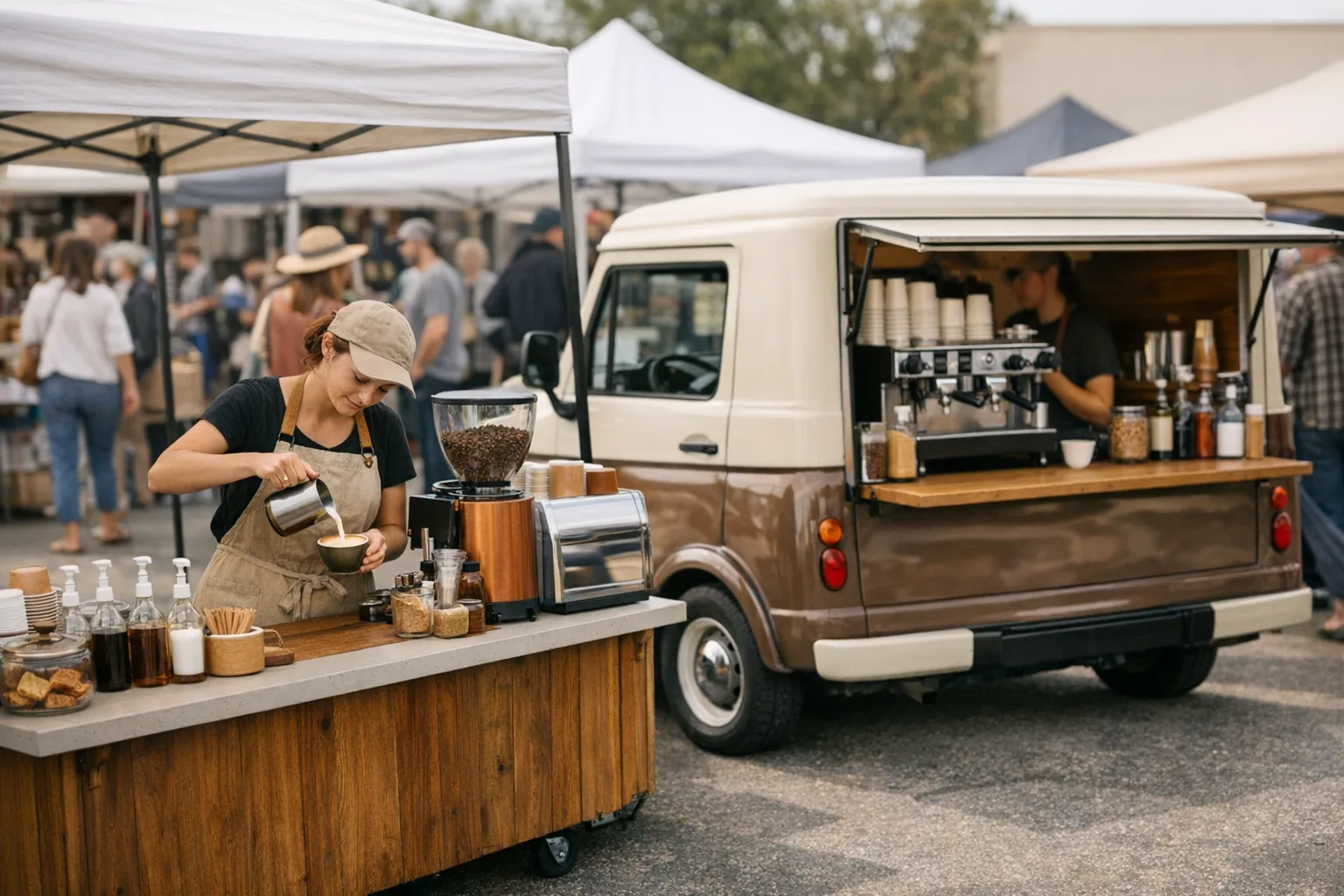
In the coffee truck vs coffee cart decision, a truck is a self-contained vehicle with a service window and interior workspace, while a cart is a smaller portable or towable espresso station. Trucks tend to suit operators who want regular daily service and more room to work, and carts tend to suit those who want a lighter start at markets and events. The right choice depends on your budget, your local rules, your storage and where you plan to sell.
Coffee Truck vs Coffee Cart: Key Takeaways
- Coffee truck vs coffee cart comes down to workspace and range versus flexibility and footprint.
- Permits, parking and inspections vary by city and county, so check locally first.
- Choose the format that matches your event calendar and menu, not the one that photographs best.
- Plan around the work of a typical sales day before you shop.
- You can sign up your business for free on ECoffeeFinder to get discovered, and every listing is reviewed before it appears.
Coffee Truck vs Coffee Cart: Start With the Work, Not the Wheels

Picture a Saturday at 6:30 a.m., loading cups, milk and water into the one vehicle or cart that has to carry your whole business. That moment is when the coffee truck vs coffee cart question stops being theoretical. Online comparisons tend to focus on looks, but your daily workload, budget and local rules decide whether a format works. This guide gives you practical criteria and leaves out income promises, because outcomes depend on your own market and operation.
How Your Sales Day Shapes a Coffee Truck vs Coffee Cart Choice
Start by describing a normal sales day in writing: where you park, how long you serve and how many drinks you expect to make in the busiest hour. Those answers shape the coffee truck vs coffee cart decision far more than any brochure. A solo founder working weekend markets has different needs from an operator planning daily office-park service. Write your answers down before you contact a single seller.
Think about the work that happens away from the window as well. Loading, hauling water, cleaning and restocking take real time, and your format changes how much of that falls on you. A cart that one person can set up quickly can beat a larger truck for short weekend shifts. A truck can win when you want to serve in several places each day, which is a core coffee truck vs coffee cart trade-off.
Space, Capacity and Workflow in a Coffee Truck vs Coffee Cart
A truck gives you an interior you can organize into stations, with refrigeration, storage and a sink within a step or two. That space helps when the line grows, because the whole workflow stays inside one structure. A cart compresses the same tasks into a tighter footprint, so every item needs a clear home. In any coffee truck vs coffee cart comparison, ask each builder for the exact layout and dimensions rather than assuming them.
Capacity is about more than the espresso machine. Count milk storage, ice, cups, syrups and waste, because those items fill space faster than most newcomers expect. If a cart cannot hold a full shift of supplies, you will restock mid-event and lose sales. If a truck sits half empty, you may be paying for room you do not need in your coffee truck vs coffee cart plan.
Coffee Truck vs Coffee Cart at a Glance
| Factor | Coffee truck | Coffee cart |
|---|---|---|
| Workspace | Interior you can organize into stations | Compact footprint where every item needs a home |
| Startup commitment | Adds a vehicle: registration, insurance and upkeep | Often smaller, though towing, storage and insurance still count |
| Where it tends to sell | Streets, business parks and events that allow vehicles | Markets, gatherings and tighter spaces |
| Staffing | Room for a small team to work together | Often one or two people at the window |
| Rules to check | Vehicle, parking, health and event requirements | Vending-location, health and event requirements |
Costs, Maintenance and Upkeep: Coffee Truck vs Coffee Cart
A truck adds a vehicle to your budget, and vehicles bring registration, insurance and mechanical upkeep. A cart or trailer may avoid some of those costs, though towing, storage and insurance still count. When you compare coffee truck vs coffee cart options, request written quotes and ask exactly what each includes, because pricing varies widely by build and seller. Treat any income figure you see online as unverified until you can trace it to a source.
Maintenance deserves its own line in your plan from day one. Espresso machines, grinders, generators and refrigeration all need regular care, and a breakdown during a booked event is expensive. Ask about parts, service access and warranty terms before you buy, whichever side of the coffee truck vs coffee cart choice you land on. Keep a small repair reserve so one failure does not end your season.
Permits, Parking and Local Rules for a Coffee Truck vs Coffee Cart
Rules for mobile food and beverage businesses differ by state, county and city, and they can change how you operate. Some places treat trucks, carts and temporary booths differently, and many require inspections or approved water and waste handling. A coffee truck vs coffee cart decision should never be final until you confirm requirements with your local health department and licensing office, and the SBA’s guide to licenses and permits is a useful starting map. We do not offer legal advice, so treat local officials as your source of truth.
Parking and vending locations can limit a truck more than a cart, or the reverse, depending on the city. Markets and festivals often set their own rules for power, insurance and booth size. Ask each organizer what they accept before you apply, because a format that fits your favorite event is worth more than one that only looks good on paper. That practical filter settles many coffee truck vs coffee cart debates quickly.
Which Operator Fits Which Format: Coffee Truck vs Coffee Cart
A cart often fits a solo founder who wants a measured start, plans to work markets and community events, and values a smaller upfront commitment. A truck often fits an operator who wants regular street or business-park service and a larger menu. Neither side of the coffee truck vs coffee cart question is better by default. Each rewards a different kind of plan.
A pop-up is a third path, since it can run from a rented space or a borrowed corner with minimal equipment. Many operators test a menu this way before committing to a vehicle or a cart. Testing shows you what customers order and what slows the line, which is evidence no spec sheet can give. That evidence makes the final coffee truck vs coffee cart choice much easier to defend.
Coffee Truck vs Coffee Cart: Facts and Answers
What is the difference in a coffee truck vs coffee cart? A truck is a self-contained vehicle with an interior workspace and a service window, while a cart is a smaller portable or towable station built around an espresso setup. The practical coffee truck vs coffee cart difference shows up in workspace, mobility and startup commitment. Trucks add vehicle costs such as registration and insurance, while carts trade interior space for flexibility.
Is a coffee cart cheaper to start than a coffee truck? The entry cost is often lower for a cart, but pricing varies widely by build and seller, so compare written quotes for the same scope. A fair coffee truck vs coffee cart budget includes insurance, storage, upkeep and repairs, not only the purchase price. Treat any online income claim as unverified until you can trace it to a source.
Do I need a permit for a coffee cart? Most places require some form of licensing or inspection, though the details vary by state, county and city. Your local health department and licensing office are the right first calls, and the same rules often shape the coffee truck vs coffee cart choice. This site does not offer legal advice, so confirm everything locally.
Can I start a mobile coffee business with a pop-up first? Yes, many operators test a menu from a rented or borrowed space before buying equipment. A pop-up shows you what customers order, how fast you can serve and what slows the line. That evidence gives your coffee truck vs coffee cart decision real data to stand on.
Where can I find other mobile coffee businesses? ECoffeeFinder’s Mobile Coffee Finds page is building a directory of verified coffee trucks, espresso carts and pop-ups. Browsing it shows how other operators present their formats and services. It is a useful reference while you weigh coffee truck vs coffee cart ideas, and you can submit your own business there.
How do I list my coffee truck or cart on ECoffeeFinder? Start on the ECoffeeFinder submission page, where a free listing account takes your contact details, business name, business type, service area, website and a short description. Business type options include coffee cart, trailer and coffee truck, and listings are reviewed and never auto-published. Once your coffee truck vs coffee cart choice is made, a listing gives customers one place to find it.
Coffee Truck vs Coffee Cart: Your Next Step
Choose the format that serves the plan you wrote, then talk to your local licensing office and at least two sellers or builders before you commit. A clear coffee truck vs coffee cart decision protects your budget and your first season. When your business is ready to be found, get your business listed for free on ECoffeeFinder and get discovered as a coffee cart, trailer or coffee truck. Listings are reviewed before they appear, and you can compare optional upgrades on the For Coffee Businesses page.